How to Set Up Your Chemistry Classroom for Student Independence
If students rely on you for everything, including directions, supplies, and answers, it can feel like you’re being pulled in 30 different directions for the entire class period.
If you have been thinking student independence would just happen, and realizing it doesn’t, you’ve come to the right place. Setting up your classroom with systems that support independence is key, and it’s where things really start to change. The truth is that student independence isn’t something students naturally have. It’s something we have to build through structure and routines.
Here’s how I set up my chemistry classroom to help students take ownership of their space and learning while giving myself breathing room during class.
What Student Independence Actually Looks Like
Before we talk set-up, it helps to define what we are aiming for. In a structured classroom, students:
Start working without being prompted
Find materials without asking
Try solving problems without coming to you
And here’s the important part. Independence doesn’t mean students are working alone. It means they have systems that help them function without needing you for every step.
Why Classroom Set-up Matters
Your classroom setup does more than organize your space. It shapes student behavior. Without systems you answer the same questions repeatedly, students interrupt constantly, and transitions take longer than they should.
With the right systems in place:
Students know what to do
Materials are easy to access
Your class runs smoothly with less effort on your part
A little intentional set-up and practice at the beginning can save you hours over the course of the year.
5 Systems That Build Student Independence
A Supply Stations Students Can Access Anytime
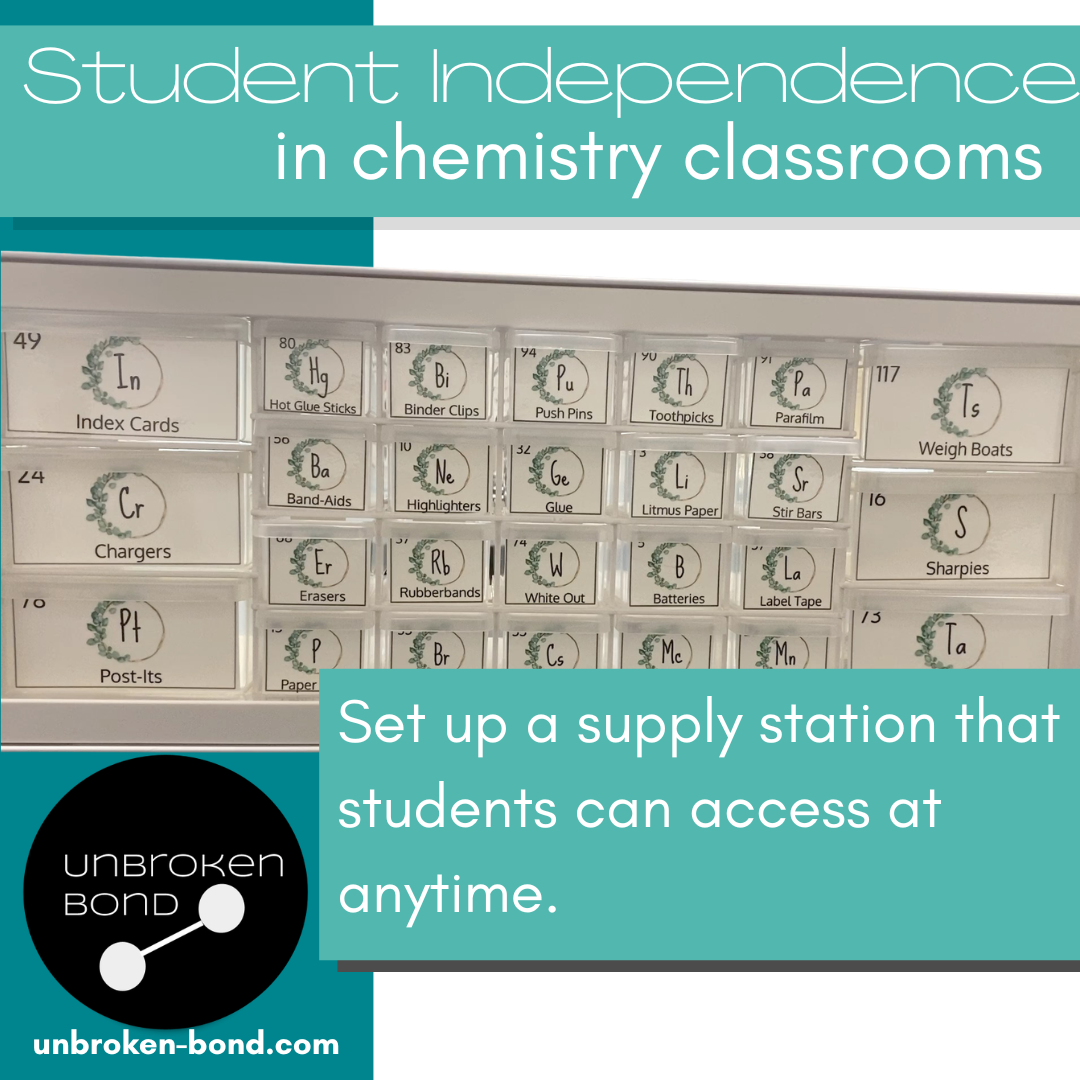
Instead of students asking for basic materials, everything they might need is in one place. This might include:
Calculators
Periodic tables
Pencils
Lab materials (when appropriate)
It might also include a spot for office materials, such as paperclips, index cards, or white-out. Check out my chemistry-themed teacher toolbox blog post here if you want some tips on where to store small office supplies that students can easily access.
Why it works: Students solve small problems on their own instead of interrupting you. Teach this early so students don’t need to ask to use it.
Setting Up A System for Materials Used Regularly
Set up an easily accessible spot or bin that contains materials you might use everyday. For me, this includes:
Whiteboards
Dry erase markers
Dry erase erasers
Why it works: Students can readily grab these materials when you give them the cue. To make it run more smoothly, try assigning this to specific students or assigning roles to students.
A Clear Turn-In System
Every assignment should have a clear place to go. This could be:
Labeled trays by class period
Color-coded bins
Digital submissions through your learning management system (LMS)
Why it works: No confusion, fewer questions, and less lost work. Again consider assigning students to this role for each table.
Posted Directions & Visual Instructions
Don’t rely on verbal directions alone. Instead combine verbal directions with:
Daily agendas
Visual reminders
Timers
Sound cues
Why it works: students can refer back to visual clues instead of asking you to repeat directions. This might have to be something you work on, but students will grasp it with repeated practice.
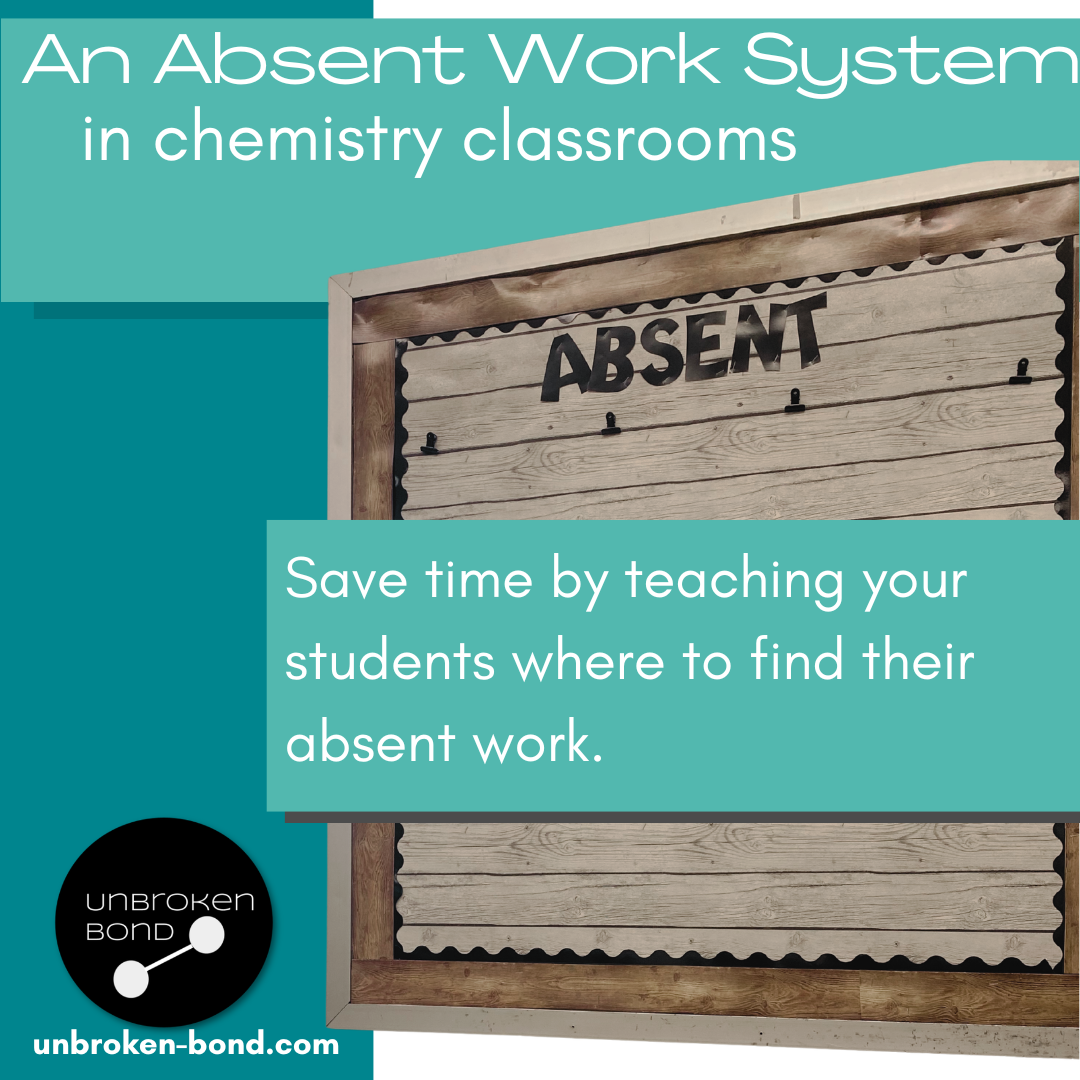
An Absent Work System
Students check a system when absent. This might be:
Absent folders
An absent board somewhere in the classroom
A digital classroom hub
A posted weekly agenda
Why it works: students can take responsibility for catching up and not ask you for “what did I miss?” If you’ve been teaching for a while, this is one of those systems that they take the least responsibility for, which is why it is important to practice and remind students of the procedures for when they miss a class.
Teaching Students to Use These Systems
This is the part that is might seem tempting to skip. But it makes all the difference.
You have to teach your systems.
That means:
Modeling exactly what you expect
Practicing procedures with students
Reinforcing them consistently
Think of procedures like content. We would’t expect students to master a concept without first teaching it or without consistent practice.
Start Small and Final Thoughts
If this feels overwhelming, start with just 2-3 systems that would make the biggest impact in your classroom. For example, a supply station and turn-in system. Once they have been mastered and are running smoothly, you can build from there.
Student Independence doesn’t happen by accident. It’s built through intentional systems. When your classroom is set up to support independence, everything changes. You’ll have fewer interruptions, smoother transitions, and more time for everything else. And honestly, it just makes your day easier.
Thanks so much for reading. Happy teaching!