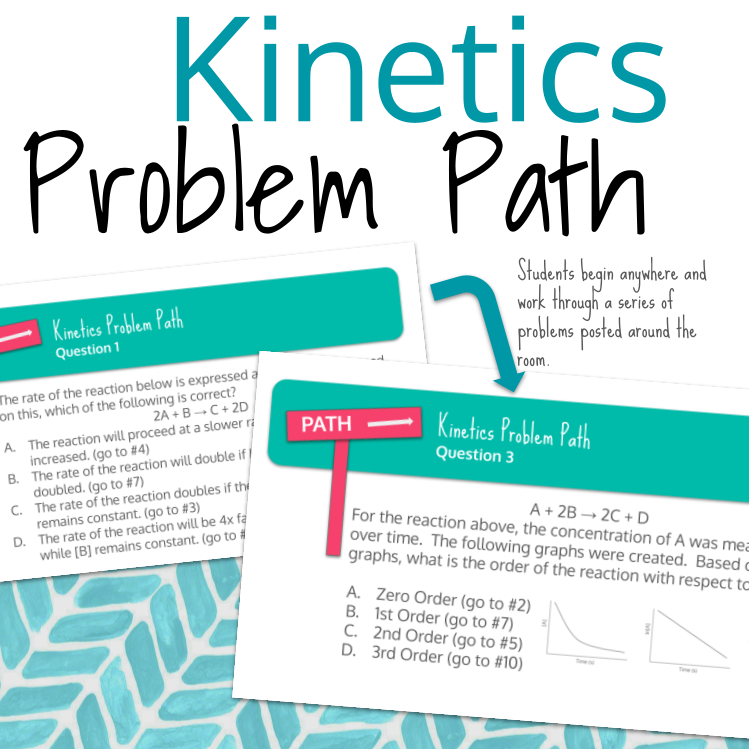
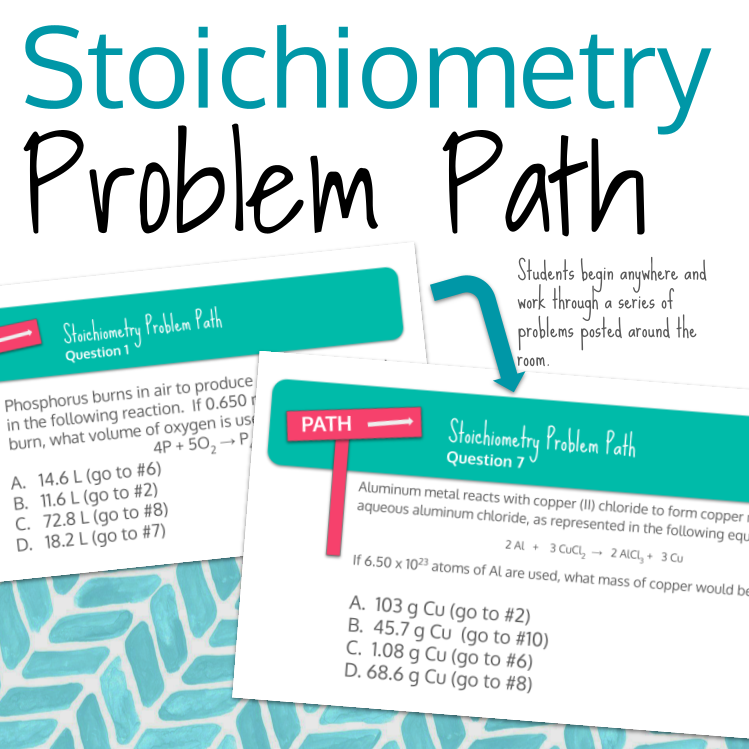
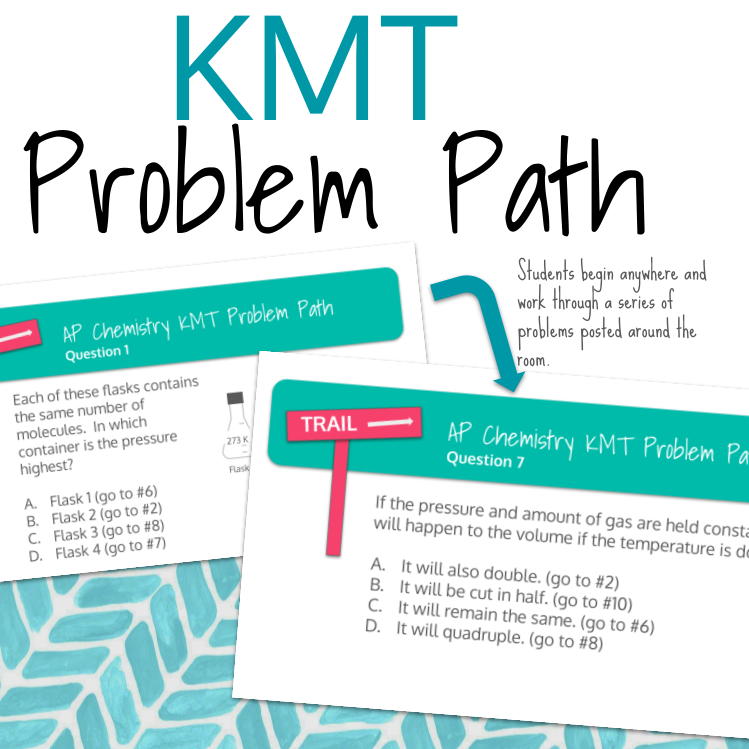
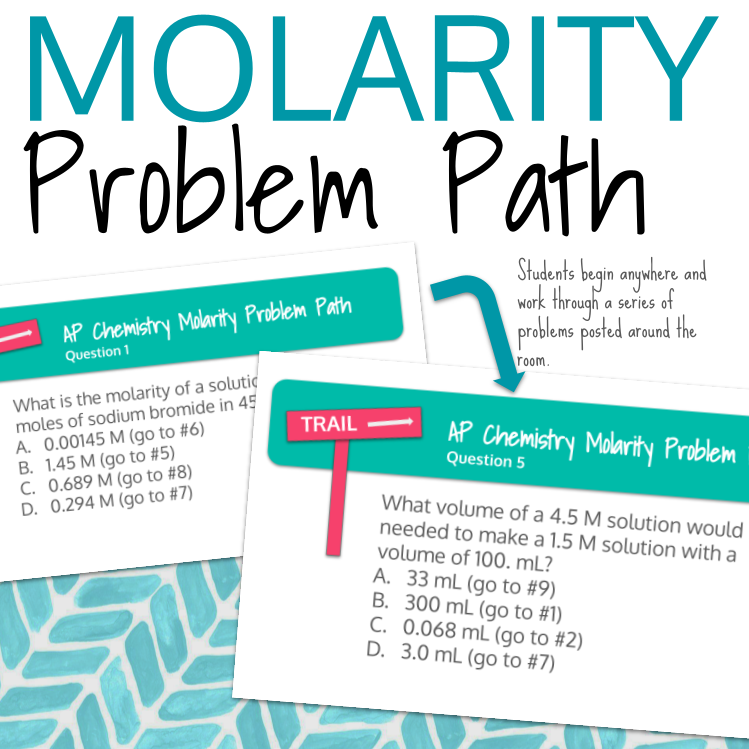
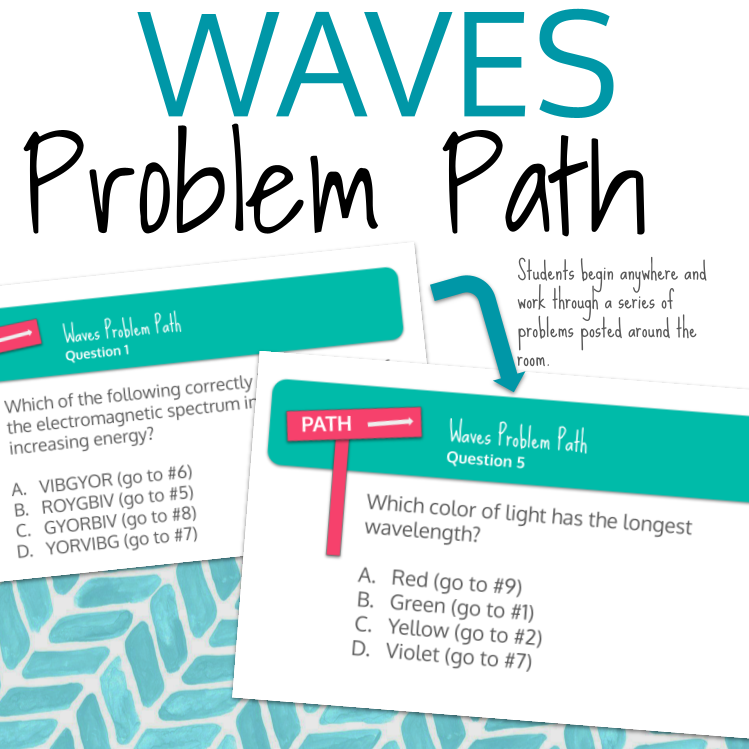
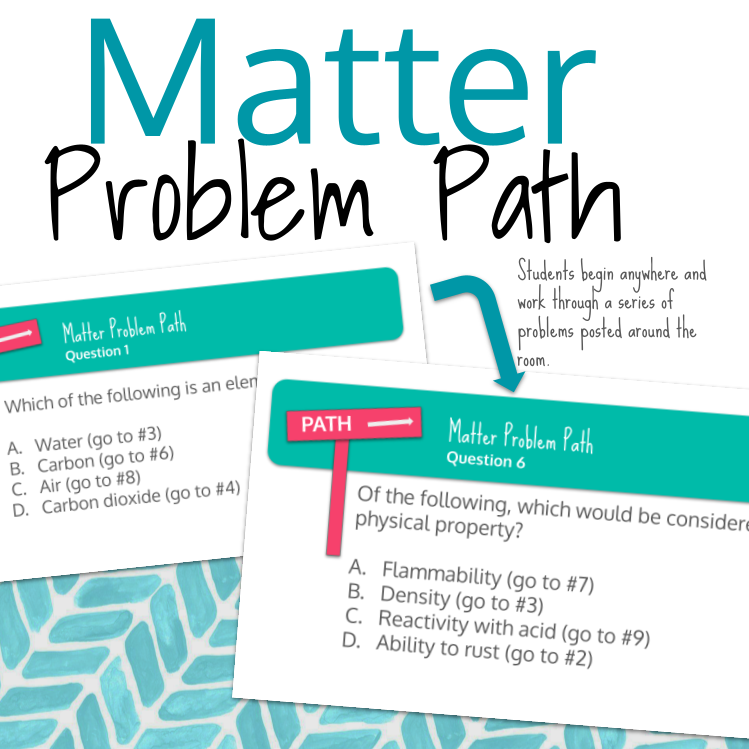
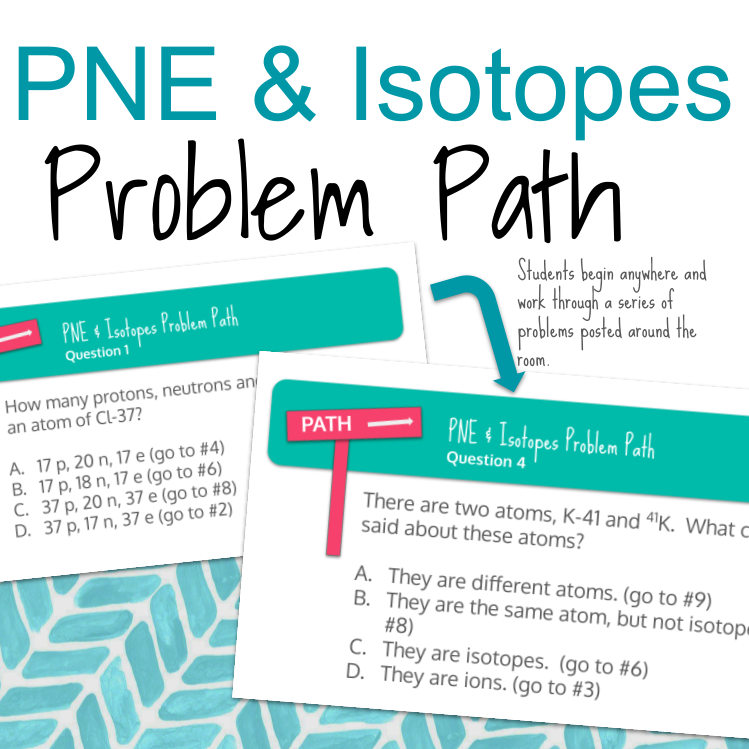
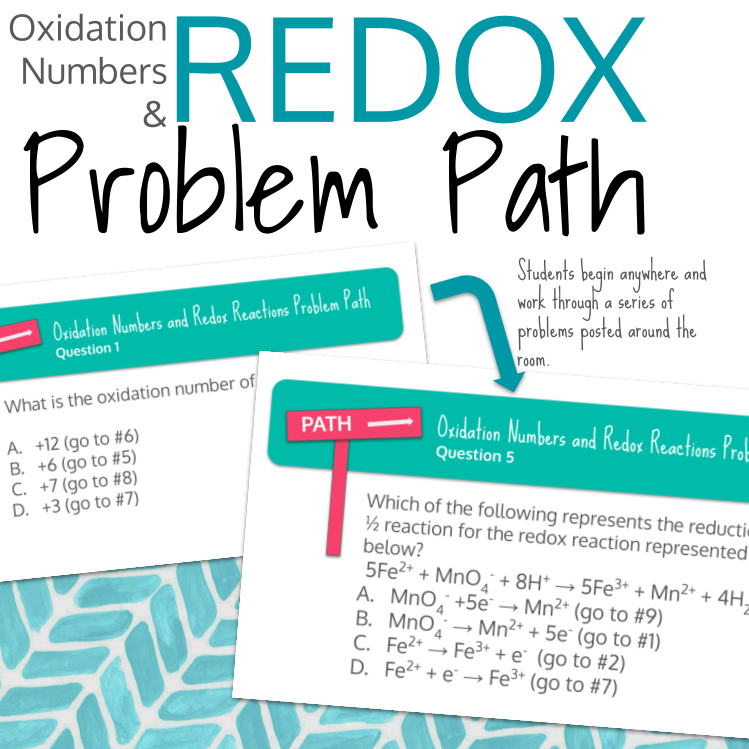
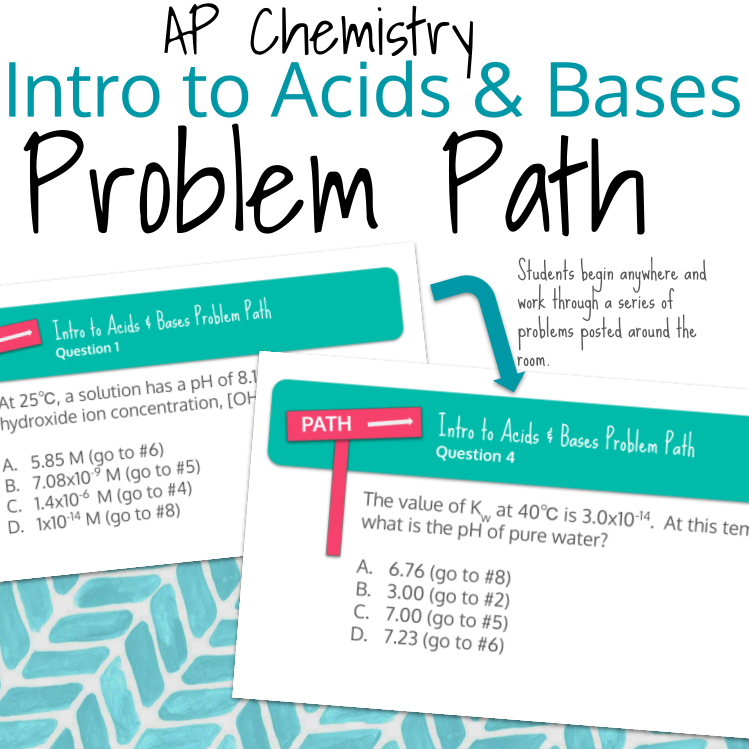
Self-Checking Problem Paths in Chemistry: How Question Trails Save Time and Improve Understanding
I always aim to give immediate feedback whenever possible in my chemistry class while keeping engagement high. And I always try to minimize my grading. If this sounds like you, or how you want to be in the future, you should add problem paths (also known as question trails) to your list of classroom activities.
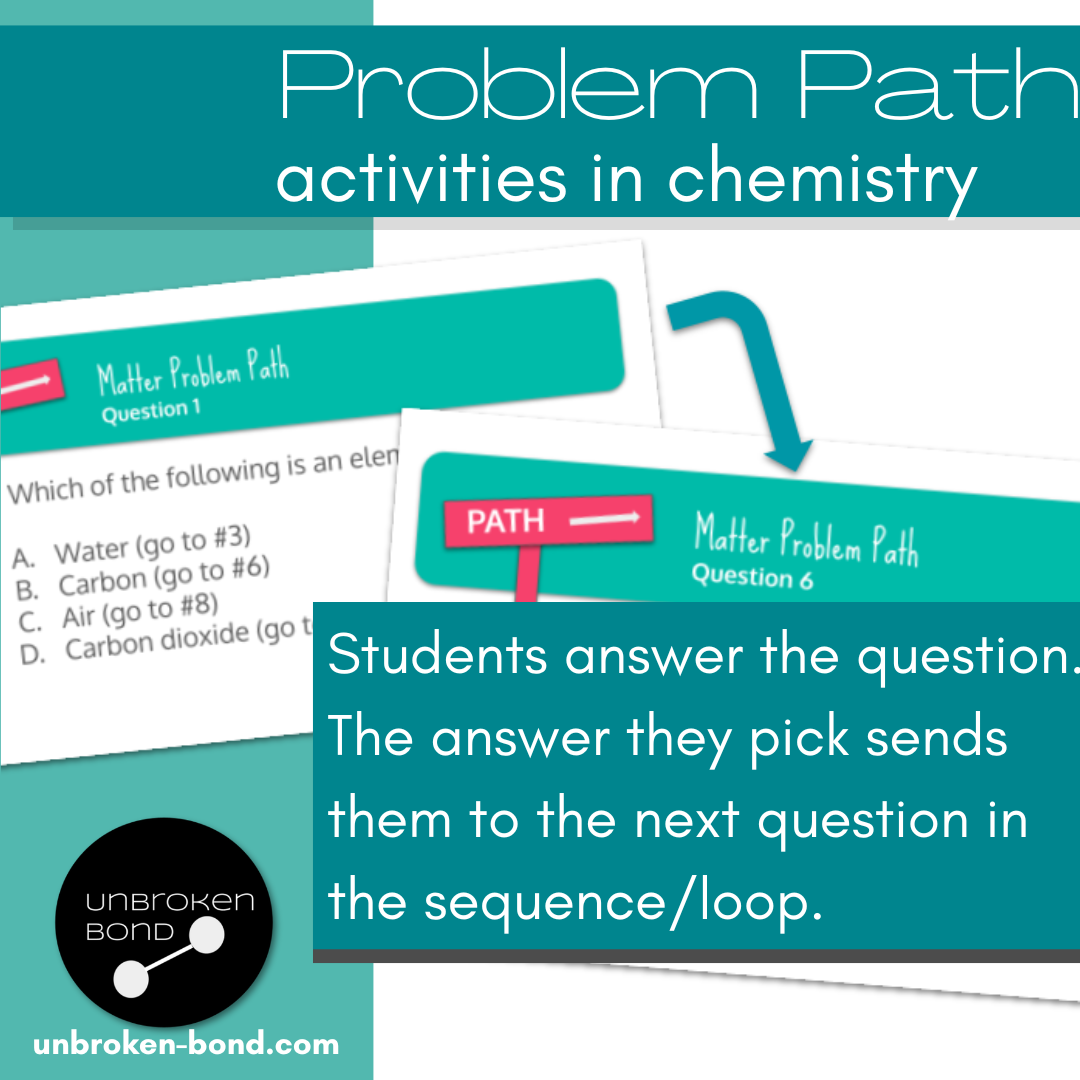
These problem paths guide students through a series of chemistry questions where each answer determines the next problem they answer. Correct answers should move students forward in the path, whereas incorrect answers will lead them to questions they have already seen, which helps students recognize they have made a mistake somewhere in the trail. This makes learning more active, intentional, and student driven.
What are Self-Checking Problem Paths (Question Trails)?
A self-checking problem path is a structured series of multiple-choice or short-answer chemistry questions connected by the answers they choose. Instead of completing a worksheet from top to bottom, students follow a “path” based on their answers.
In chemistry, this works well for conceptual content and calculations. Because students receive feedback as they work the path, they don’t have to wait for the teacher to grade and pass back work to know if they went wrong or not.
Why Self-Checking Problem Paths Work so Well in Chemistry
Immediate feedback without extra grading
One of the benefits of problem paths is that students will know in the moment if they have made a mistake. Instead of reinforcing errors, students can catch misconceptions early and adjust their thinking in real time.
For teachers, this means:
Less time grading
Fewer repeated errors
More meaningful partner discussions
Promotes deeper conceptual understanding
Chemistry is about connecting concepts and applying logic. Question trails get students talking about chemistry, and justifying their answers to pick the correct choice. This makes question trails ideal for:
Review days
Spiral review
Skill reinforcement
Intervention or reteaching
Encourages student ownership and persistance
Instead of asking “is this right?” students can self-monitor their progress. When they end up at a problem they’ve already seen, they reflect with questions such as “did I set this problem up correctly?” or “do I need to re-read the question?” This type of thinking can build confidence and independence, which chemistry students will need as the year progresses.
Easy differentiation
Problem paths are naturally flexible. You can modify answer choices or remediation loops for struggling students. You can add challenge paths for more advanced students. They also allow students to move at their own pace.
How to Set Up a Self-Checking Problem Path Activity
Creating your own chemistry problem path doesn’t have to be complicated.
Step 1: Choose a Focused Chemistry Skill
Pick a target concept. For example calculating molar mass or identifying reaction order.
Step 2: Plan Answer Branching
Each answer choice should send students to:
The next question in the path (i.e. 1 → 5 → 3 → 8 → etc.) OR
a review or retry question that addresses a common mistake
Step 3: Choose your Format
Printable question cards around the room
Digital versions using slides or forms
Step 4: Set Clear Expectations
Let students know it’s okay to loop back. The goal is understanding and not speed. Checking their own work is part of the learning process.
Classroom Uses for Chemistry Problem Paths
Self-checking problem paths are incredibly versatile. Teachers use them for unit reviews, station rotations, test prep, and small group remediation. They don’t take a ton of time, and you can even have students work on them while a lab is running and you have some down time. They work well as low-prep, high-engagement alternatives to traditional worksheets. Problem paths also reduce the teacher grading workload, make misconceptions visible in real time, and encourage productive struggle.
Do you use problem paths in your classroom? Would you like to start? If you try them out, let me know on Instagram.
You can also check out some of my other blogs on self-checking activities. Check out self- and partner-checking worksheets here and mole hill (dominoes) here.
Thanks for reading! Happy teaching!

If you want to try self-checking problem paths without starting from scratch, explore my ready-to-use chemistry problem path activities in my Teachers Pay Teachers store. They’re designed to give students immediate feedback while saving you valuable time. Browse my problem path category here or click on the links below.