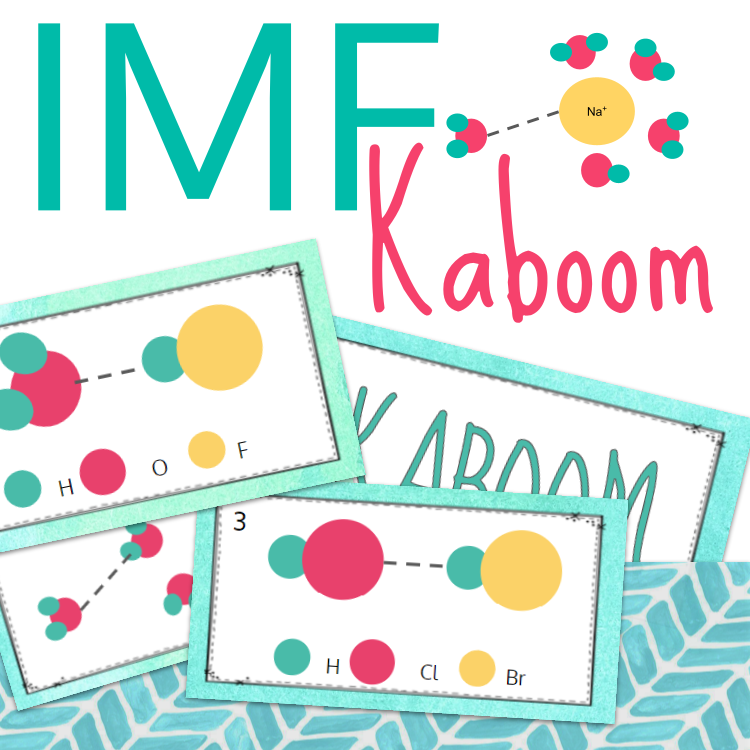
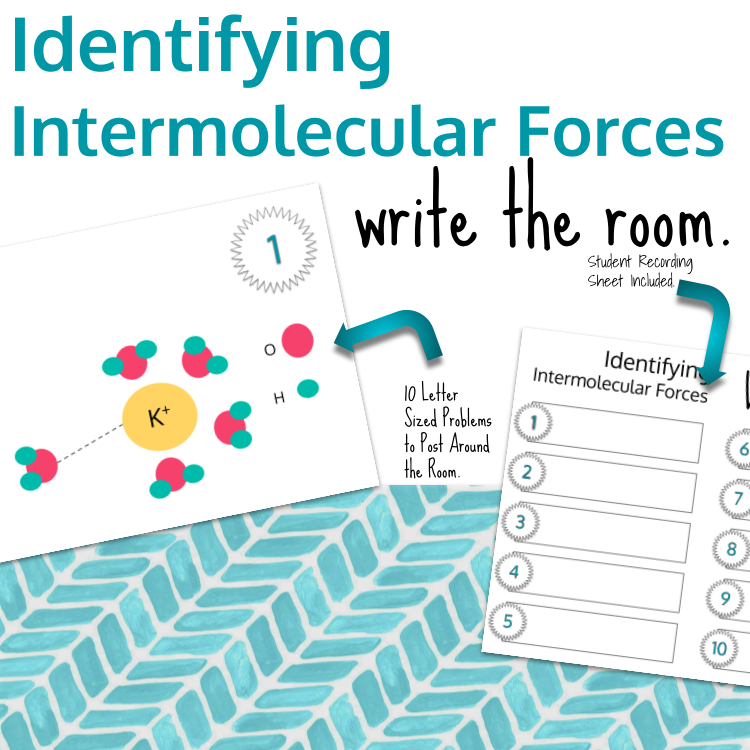
Intermolecular forces (IMFs) are an important part of the AP Chemistry Unit 3 curriculum, but students often struggle to connect the different types of attractions to the physical properties of substances. It's one thing to identify London dispersion forces, dipole-dipole interactions or hydrogen bonding. It’s another to explain why one substance has a higher boiling point or lower solubility than another.
If you’re looking for some activities for intermolecular forces in AP Chemistry, here are 5 ways to help students practice identifying IMFs, comparing substances, and explaining their reasoning.
Intermolecular Forces Card Sort
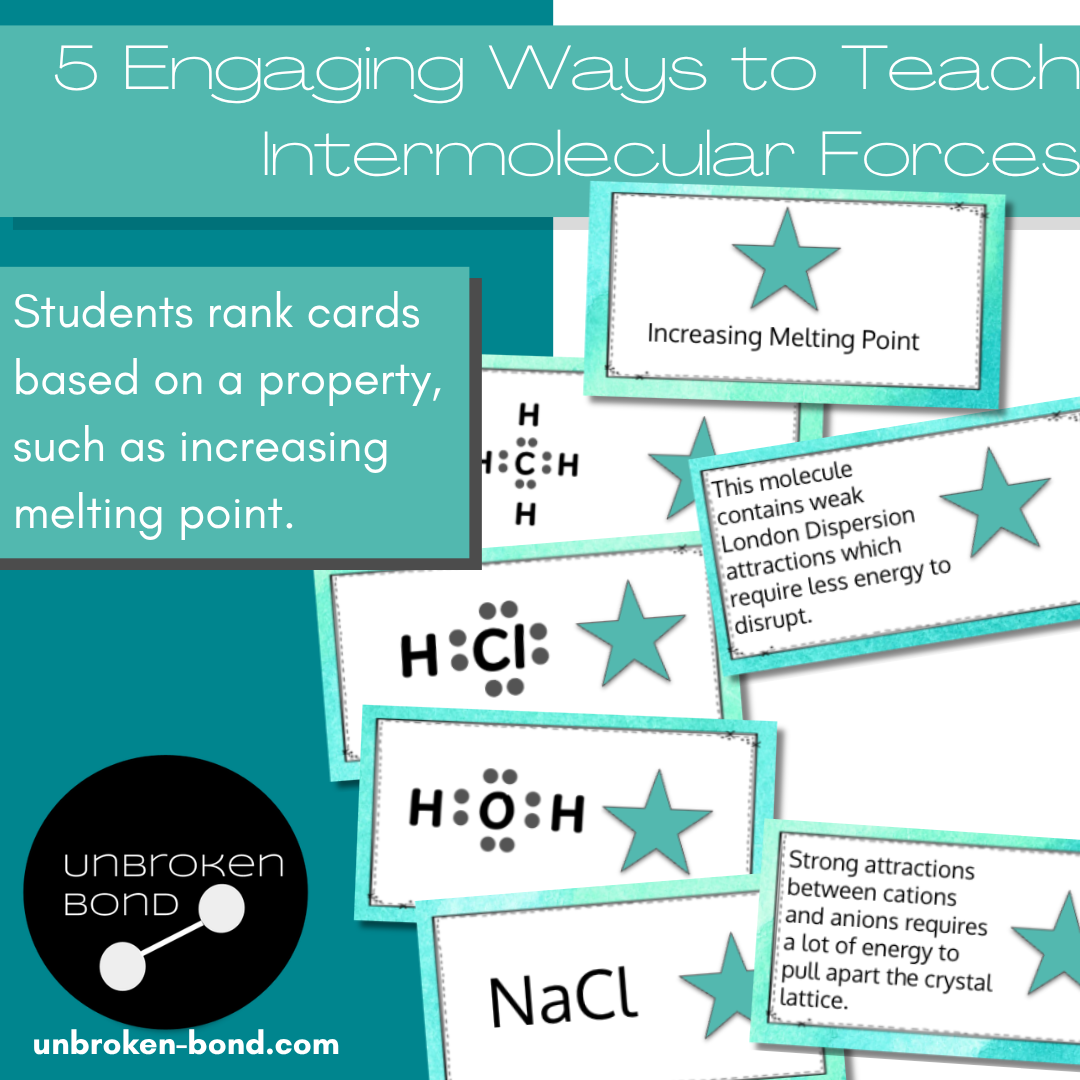
Give students a stack of cards with different representations of molecules and ask them to sort them into categories based on what intermolecular force they would exhibit.
For AP Chemistry, I created a set of cards that included the headers (categories) of:
London Dispersion
Dipole-Dipole
Dipole-Induced Dipole
Hydrogen Bonding
Ion-Dipole
In addition to these categories, I included a variety of representations of molecules. Some included a written description. Some cards included Lewis Structures, and some included particle diagrams.
The task is simple in that students work with a partner to sort the representations into the categories. It stimulates good conversation between partners and allows you to address some misconceptions.
Use Particle Diagrams to Visualize IMFs
Intermolecular forces can be difficult for students because they can’t actually see the attractions between molecules. Particle diagrams help make these abstract concepts more concrete.
Have students draw representations of substances that exhibit different intermolecular forces. Then ask questions, such as:
Which sample would have stronger intermolecular attractions?
How would those attractions affect boiling point?
Which substance would have a higher solubility in water?
These diagrams also provide an opportunity to address misconceptions, such as confusing bonds within the molecule with attractions between molecules.
Have students Rank Substances
Instead of asking students to compare just two substances, give them three or four molecules and have them rank them from lowest to highest boiling point.
For example, students could compare CH4, CH3Cl, and CH3OH.
Students must consider molecular polarity, and then determine what intermolecular force the molecule would exhibit, before they can rank the molecules.
To add another layer, ask students to write a short explanation defending their ranking using evidence from the molecular structure and intermolecular attractions.
Use Partner Discussions to Build AP Chemistry Reasoning
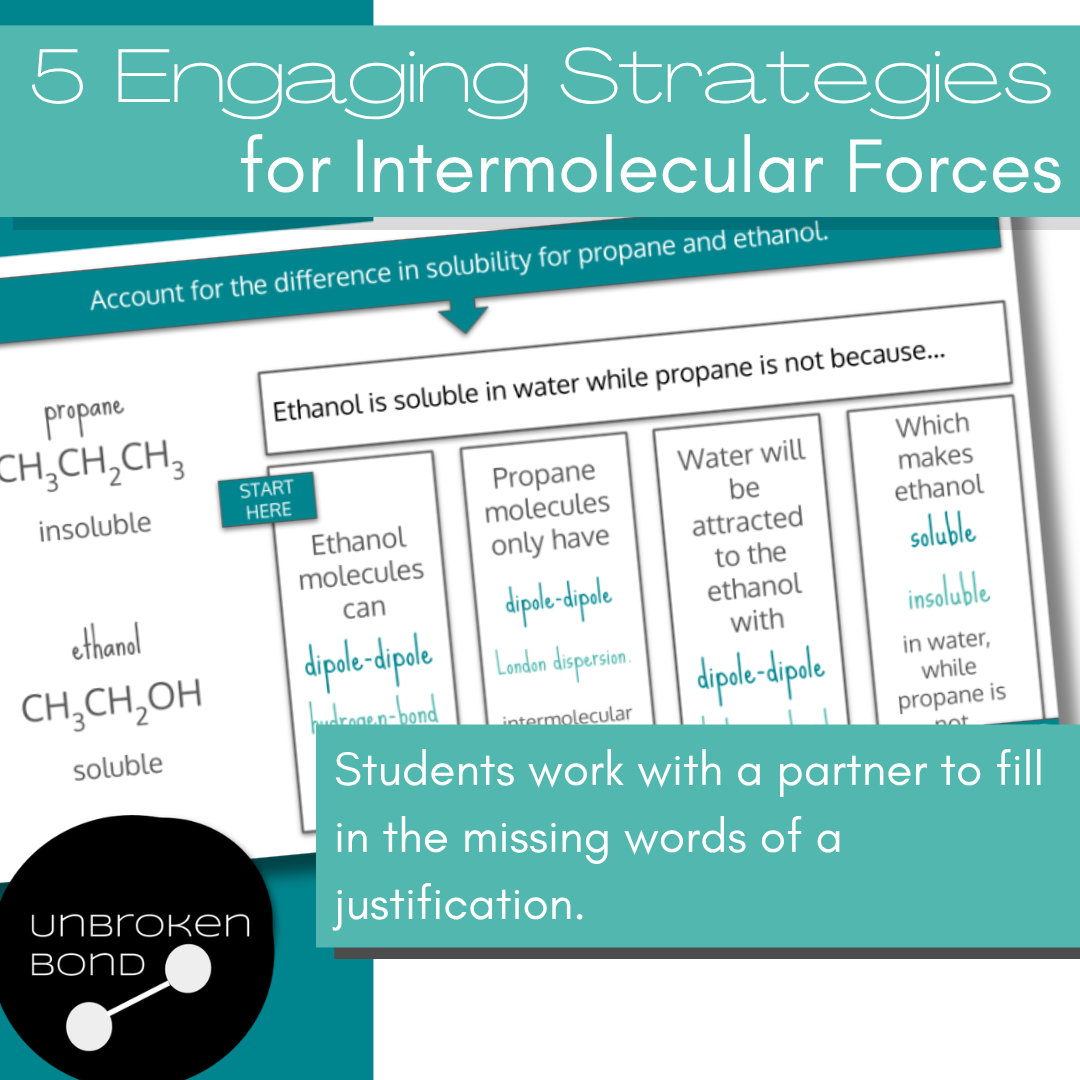
AP Chemistry students need practice explaining their thinking, not just arriving at the correct answer.
Give partners a comparison question, such as “why does H2O have a higher boiling point than H2S?”
Have one student explain their reasoning while the other listens, ask questions, and identifies any missing information.
Then have students switch roles with another question.
You can also provide sentence starters for students who need additional scaffolding:
Both substances experience…
However, ____________ experiences stronger intermolecular attractions because…
As a result, more energy is required to…
These short discussions help students develop the scientific explanations they’ll need for AP Chemistry free-response questions. To see how I developed reasoning skills with periodic trends, check out this blog post. While focused on periodic trends, many of these could be adapted to intermolecular forces.
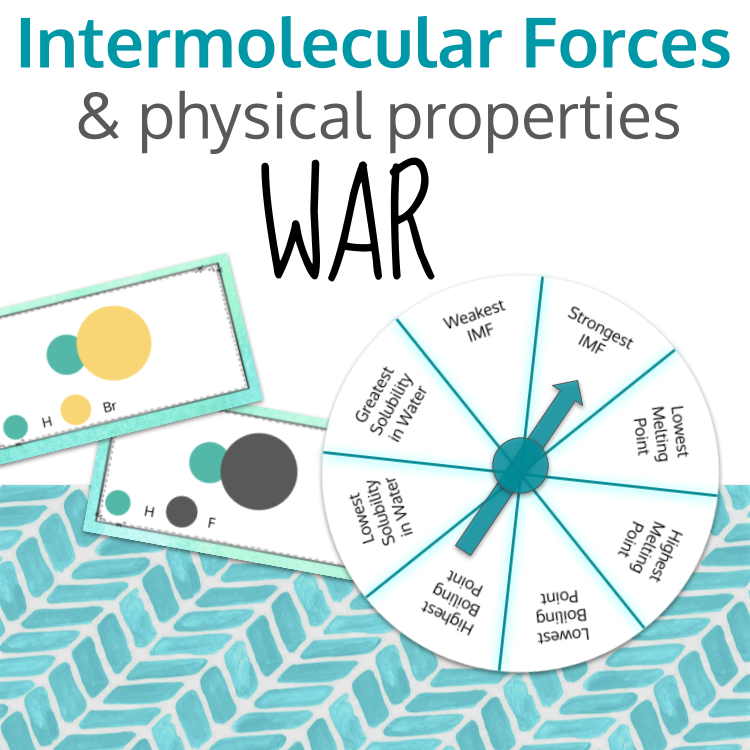
Play Intermolecular Forces WAR
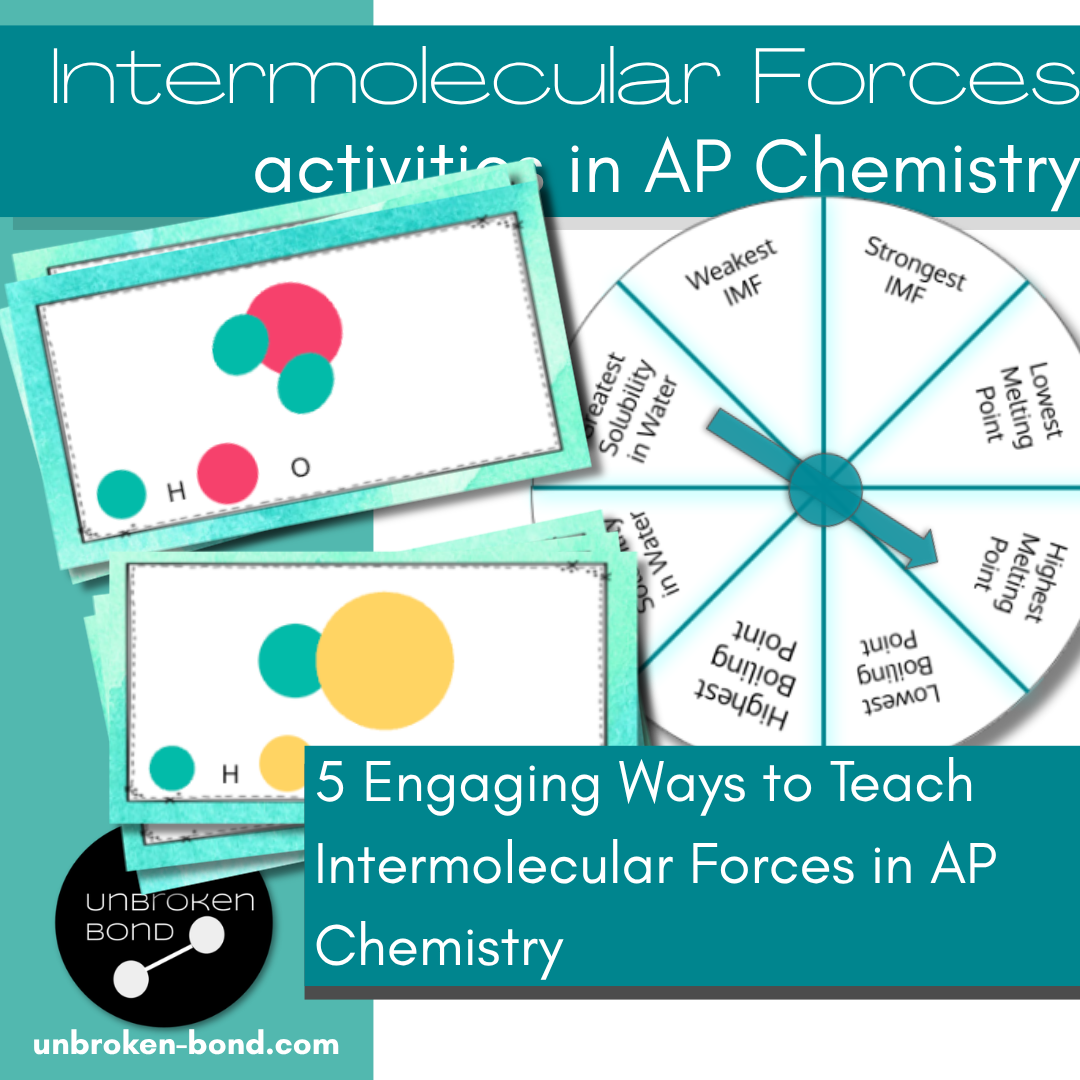
One of my favorite ways to turn chemistry practice into a game is with a game of WAR. Instead of simply comparing numbers on playing cards, students compare molecules based on their intermolecular forces.
For example, students might compare two substances and determine which has a higher boiling point based on the types and relative strengths of their intermolecular attractions.
All you need are some cards with different molecules, or you can use a ready to go IMF WAR card game to get students practicing.
I’ve got an entire blog post about different WAR card games for chemistry if you want to read it here.
Making Intermolecular Forces Practice More Meaningful
Teaching intermolecular forces doesn’t have to be difficult. Choose strategies that allow students to develop a stronger understanding of intermolecular forces and how those forces would affect properties of substances.
Students will develop the skills to explain why substances have different properties, as well as build reasoning skills that will be useful for the remainder of the year. Thanks for reading. Happy teaching!

Love these strategies but have no time to make your own? Check out these resources below!